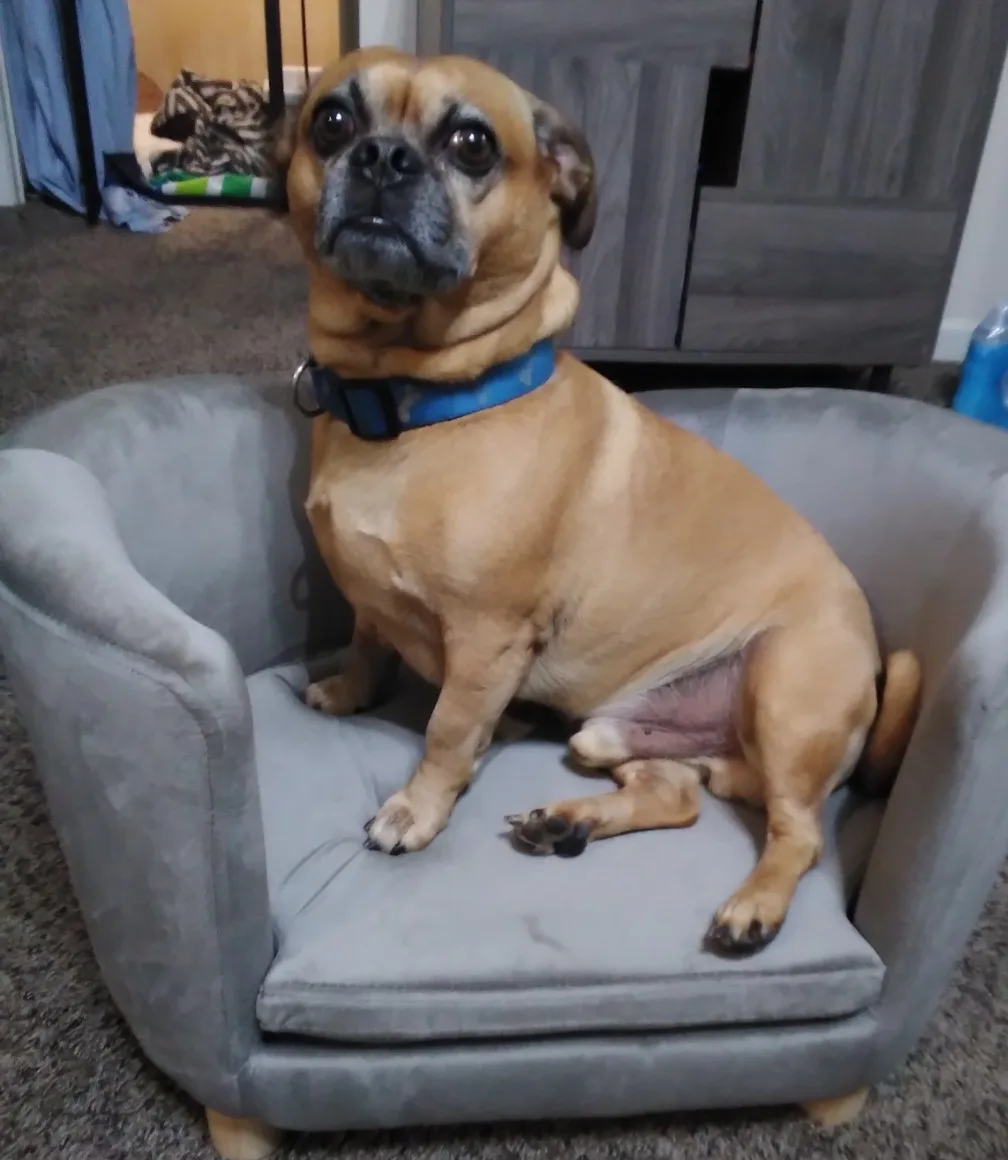
Nobody hands you a manual when your dog turns ten. One day you notice he is waiting at the bottom of the stairs instead of racing up them, or that his muzzle has gone a little more gray, and you realize you are now caring for a senior dog. Here is what changed for Dash, and what we adjusted to keep him comfortable and happy.
1. Meals got smaller and more predictable
Older dogs often burn fewer calories, and both pugs and dachshunds are prone to putting on weight. For a long-backed dog, extra pounds are a big deal: they put pressure on the spine and joints and make everything harder. We moved Dash to measured portions at the same times every day instead of eyeballing a scoop. Consistency turned out to matter as much as the amount: when meals arrive like clockwork, he spends less time pacing and begging in between.
If your dog is food-obsessed like ours, an automatic feeder can take a lot of the drama out of meal times. We wrote more about that in our post on feeders for food-motivated dogs.
2. Exercise became shorter, but more often
Dash still loves walks, but a long weekend outing now leaves him stiff the next day. We switched to two or three shorter walks spread through the day, with plenty of time for sniffing. For a dachshund mix, a slow "sniff walk" is real exercise for the brain, and it tires him out in a good way without overworking his joints.
3. We started protecting his back
Dachshund mixes inherit a long back on short legs, and that body shape puts them at higher risk of back and disc problems as they age. We added a ramp to the couch, carry him up and down longer flights of stairs, and discourage jumping off furniture. If your long-backed dog ever seems wobbly, cries when picked up or does not want to move, call your vet right away.
4. Vet visits went from yearly to twice a year
Many vets recommend checkups every six months for senior dogs, because problems like dental disease, kidney changes and lumps are easier to manage when they are caught early. We started keeping a simple note on the phone with anything unusual — changes in thirst, appetite, energy or bathroom habits — so we have specifics to share at each visit instead of trying to remember.
5. Teeth became a priority
Small and medium breeds are prone to dental problems, and they get worse with age. Bad teeth can affect appetite and overall health. Regular brushing (yes, he complains), dental checkups and sensible chews made a noticeable difference in his breath and comfort.
6. Sleep spots got an upgrade
Senior dogs sleep a lot — Dash easily naps most of the afternoon. A supportive bed away from drafts, and a rug or runner on slippery floors so he does not slide when he gets up, helped him move around the house with more confidence.
7. Patience became the main tool
Older dogs can get more sensitive to noise, change and being left alone. Dash is more vocal about the mail carrier than ever, and car rides make him more excited (and more anxious) than they used to. Keeping routines steady, giving him a quiet spot and not rushing him through transitions helped more than any single product.
The bottom line
A senior Pug Weenie is still a Pug Weenie: funny, stubborn and completely sure he deserves a bite of your sandwich. Small adjustments to food, exercise, vet care and comfort let Dash keep doing the things he loves. If your dog is entering the senior years, start with one change at a time, talk to your vet, and enjoy this stage — it is a good one.
Watch Dash
🐾 Dash's Favorite Things
The feeder, treats, calming help and sitter service we actually use.
See Dash's favorite things →
Post a Comment