This post contains affiliate links. If you buy through them we may earn a small commission at no extra cost to you — it helps keep Dash in treats.
Some of Dash's funniest clips come from his big reactions: the mail carrier, the car pulling into a parking lot, a delivery truck rumbling past. On camera it looks hilarious. In real life, we know some of that energy is stress, and it has grown a little as he has gotten older. Here is what has helped us keep him calmer.
Why older dogs can get more anxious
Senior dogs sometimes become more sensitive to noise, changes in routine and being left alone. Changes in hearing or vision can make the world feel less predictable, and achy joints can make a dog feel more vulnerable. If anxiety appears suddenly or gets much worse, it is worth a vet visit to rule out pain or a medical cause.
Things that helped Dash
Keep a predictable routine
Walks, meals and bedtime at roughly the same times give an older dog a sense of control. Dash is noticeably calmer on days that follow his normal rhythm.
Create a safe spot
A covered bed or crate in a quiet corner, with a favorite blanket, gives him a place to retreat when the doorbell rings or a storm rolls in. We never force him in — it is his choice.
Manage the window
Dash's relationship with the mail carrier is, let us say, complicated. Frosted window film on the lower panes and moving his favorite couch spot cut down the barking a lot, because he simply sees less of the street.
Practice car rides in small steps
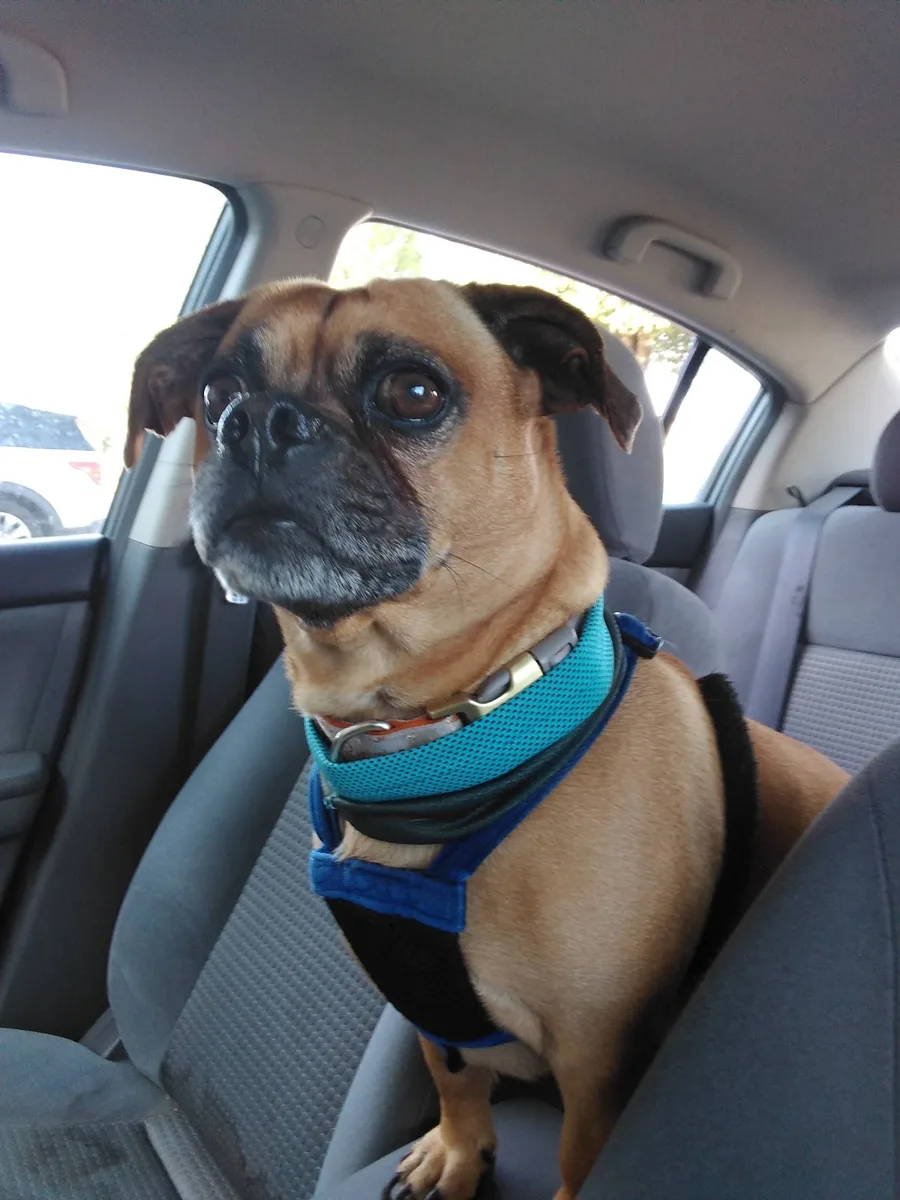
Short, boring trips that end somewhere pleasant (not always the vet) help a dog stop expecting drama. A secure harness or car seat keeps him safe and settled, and a few calm minutes in the parked car before driving off helps too.
Background noise for storms and fireworks
A fan, soft music or a TV can mask sudden sounds. Closing curtains reduces the flashes. Staying calm yourself matters more than people think — dogs read our reactions.
Calming supplements
Some owners try calming chews or oils as part of a broader plan. These are not a cure, results vary from dog to dog, and they can interact with medications — so talk with your vet before starting anything, especially with a senior dog. We treat them as one small tool alongside routine and training, not a fix on their own.
When to get help
If your dog is destructive, not eating, hurting himself or panicking, talk to your vet or a certified behavior professional. Severe anxiety is very treatable, and nobody should have to manage it alone.
Watch Dash
🐾 Dash's Favorite Things
The feeder, treats, calming help and sitter service we actually use.
See what helps Dash stay calm →
Post a Comment